



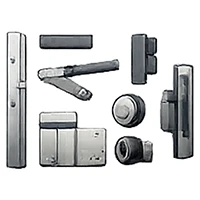

In terms of technical specifications, the core advantage of aluminum alloy casement windows lies in the soundness of their structural design. The window sash is connected via butt hinges or friction hinges, offering high load-bearing capacity that supports larger glass panes. Regarding profile design, the wall thickness of primary load-bearing sections often exceeds 1.8 mm, ensuring the window remains undeformed during long-term use. In terms of sound and thermal insulation, the use of triple-pane insulating glass and a thermal break structure allows the window assembly to achieve a heat transfer coefficient as low as 1.0 W/(m²·K) and sound insulation exceeding 40 dB. Additionally, the drainage system is typically designed to be concealed, preventing rainwater backflow.
Technical Features Of Aluminum Alloy Casement Windows
Popular Products
-
![Inward Casement Window]() Inward Casement WindowNamed Inward Casement Window, it is multi-cavity thermal break aluminum window with inward opening and tilt-turn...read more
Inward Casement WindowNamed Inward Casement Window, it is multi-cavity thermal break aluminum window with inward opening and tilt-turn...read more -
![Slim Frame Sliding Window]() Slim Frame Sliding WindowNamed High strength sliding Window, it is 105 standard thermal break side-pressure sliding window. Adopted lateral...read more
Slim Frame Sliding WindowNamed High strength sliding Window, it is 105 standard thermal break side-pressure sliding window. Adopted lateral...read more -
![Vertical Lift Window]() Vertical Lift WindowNamed Vertical Lift Window, it is 83 standard thermal break vertical lift aluminium window. Built-in balance...read more
Vertical Lift WindowNamed Vertical Lift Window, it is 83 standard thermal break vertical lift aluminium window. Built-in balance...read more -
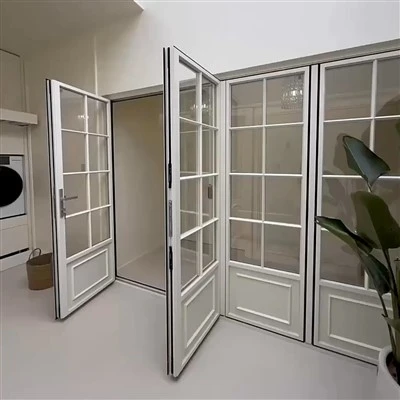
![French Vintage Aluminium Door]() French Vintage Aluminium DoorThis French Vintage Aluminium Door restores classic old iron steel door texture with 130 thick thermal break frame....read more
French Vintage Aluminium DoorThis French Vintage Aluminium Door restores classic old iron steel door texture with 130 thick thermal break frame....read more
Send Inquiry